The 6th SPWLA SW Annual Symposium Successfully Convened
Organized by the SPWLA Southwest (SW) Chapter, the 6th SPWLA SW Annual Symposium, jointly held with the 2nd Yangtze International Forum on Petrophysics and Logging Technology Innovation for Unconventional Reservoirs, was successfully convened from January 30 to February 1, 2026, at Yangtze University in Jingzhou, China.
The conference brought together more than 300 experts and researchers from 25 universities, as well as 28 research institutes and energy companies. Participants engaged in in-depth discussions on frontier scientific challenges and key technologies in unconventional oil and gas reservoir exploration and development, aiming to advance interdisciplinary integration among rock physics, well logging, geophysics, and artificial intelligence.
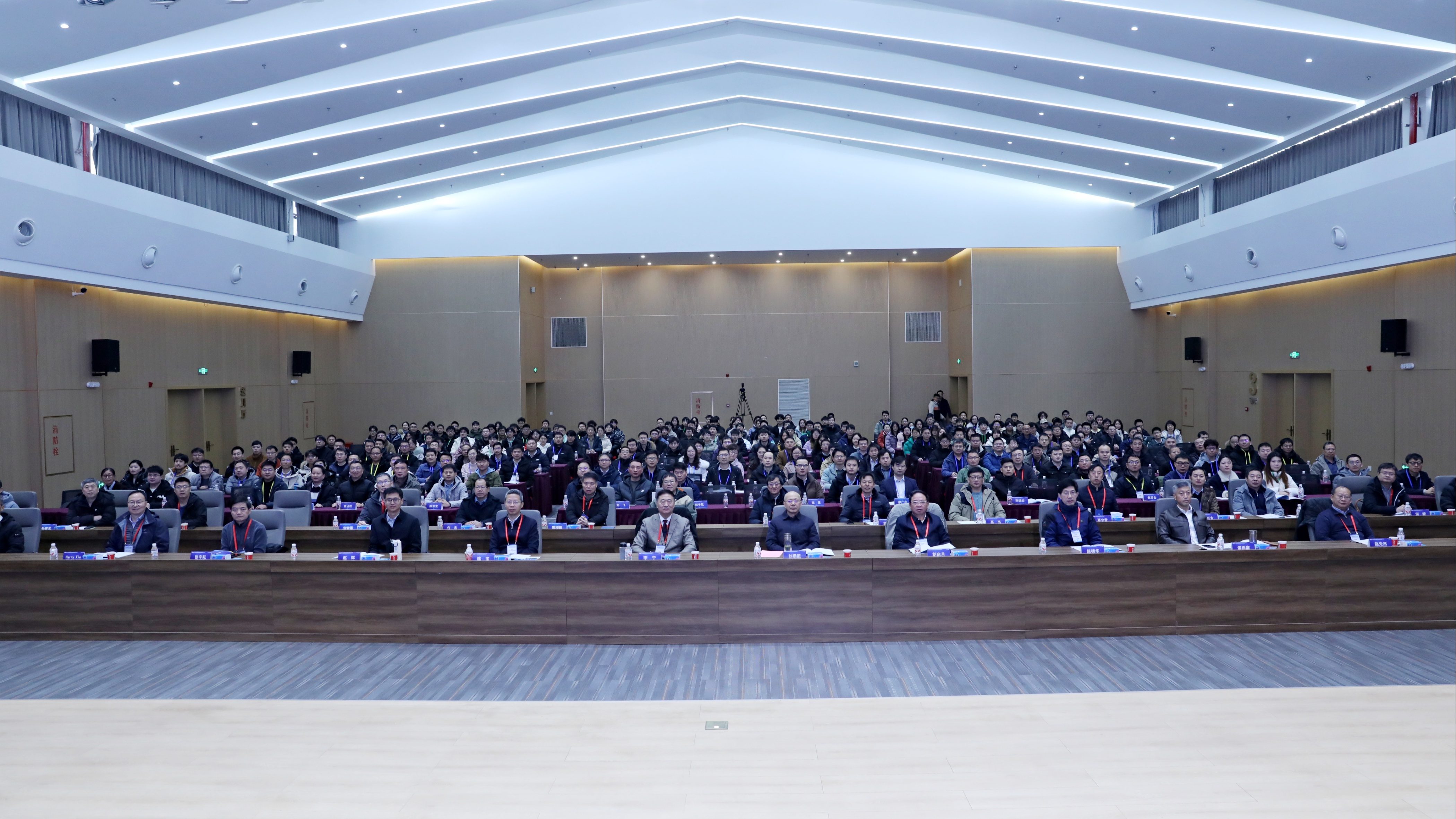
Group photo of participants at the 6th SPWLA SW Annual Symposium
Opening Ceremony Highlights
The opening ceremony featured welcome addresses from Professor Yongsheng Liu, President of Yangtze University, and Professor Hua Wang, President of the SPWLA SW Chapter. Both speakers extended a warm welcome to domestic and international attendees and emphasized the importance of academic exchange and technological innovation in the evaluation of unconventional reservoirs.
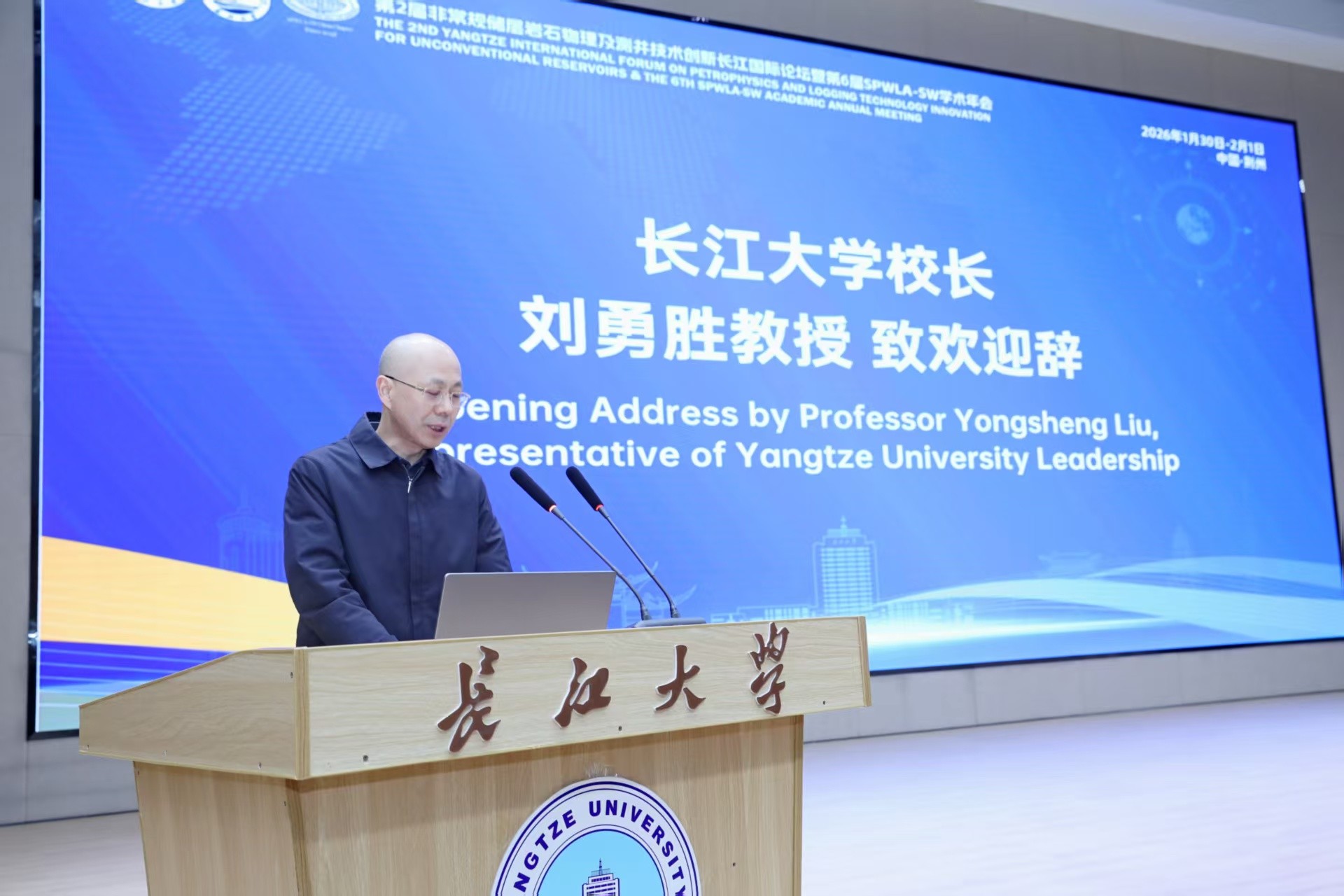
Professor Yongsheng Liu, President of Yangtze University, delivering the opening address
Professor Wang also presented a comprehensive overview of the SPWLA SW Chapter’s activities and achievements in 2025, highlighting progress in academic outreach, student engagement, and international collaboration.
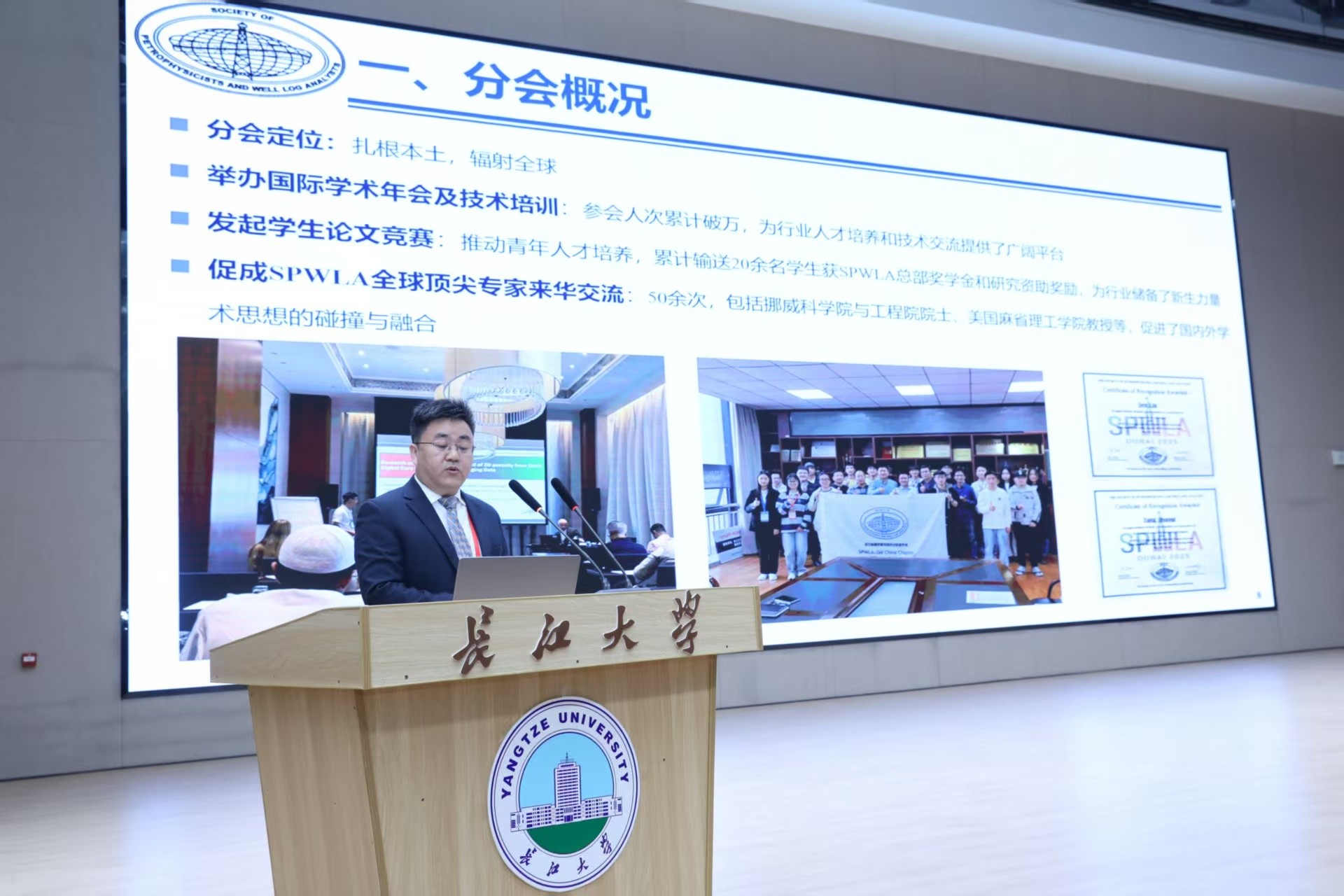
Professor Hua Wang, President of the SPWLA SW Chapter, presenting the 2025 annual report
In addition, Mr. Robert Gales, President of SPWLA International, delivered an online address recognizing the growing influence of the SPWLA SW Chapter within both regional and global academic communities and expressing strong support for the continued development of the symposium and forum.
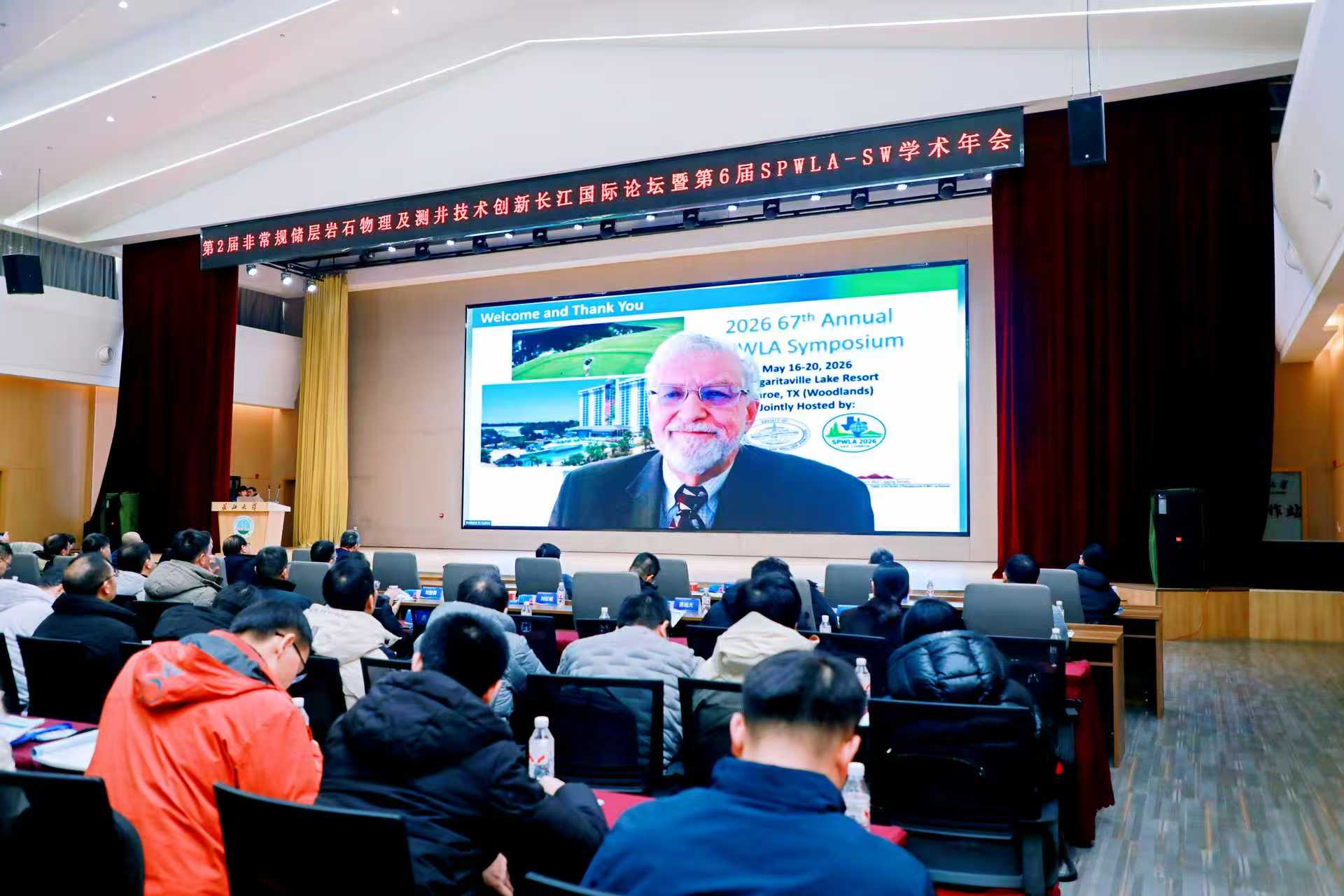
Mr. Robert Gales, President of SPWLA International, delivering an online address
Technical Program and Key Topics
The technical program featured plenary and parallel sessions covering a broad range of topics related to rock physics and logging technologies for unconventional reservoirs, including:
1. Rock Physics and Digital Rock Physics
2. Emerging Methods and Technologies in Well Logging
3. Logging Evaluation of Unconventional Reservoirs
4. Deep and Ultra-Deep Logging Technologies
5. Logging While Drilling (LWD) and Mud Logging
6. Applications of Artificial Intelligence in Unconventional Reservoir Evaluation
7. Dynamic Monitoring of Oil and Gas Reservoirs
8. Intelligent Acquisition Systems and Instrument Development
9. Intelligent Processing of Logging Data and Software Development
Several focused sessions highlighted recent advances in electromagnetic, acoustic, and nuclear magnetic resonance (NMR) logging, as well as innovations in logging instrumentation, artificial intelligence–assisted interpretation, and integrated reservoir evaluation methodologies. These discussions reflected both theoretical progress and practical field applications in unconventional reservoir evaluation.

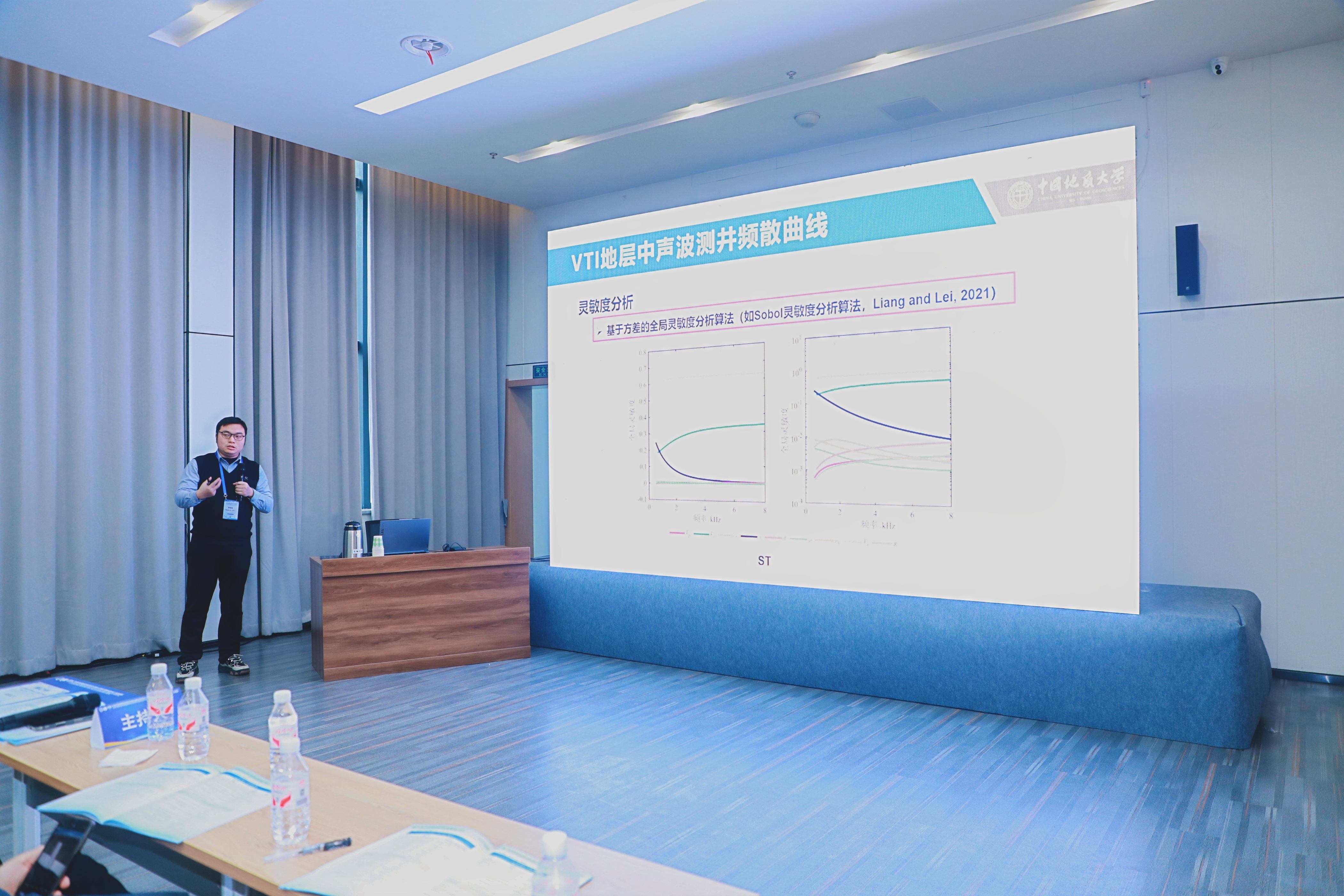

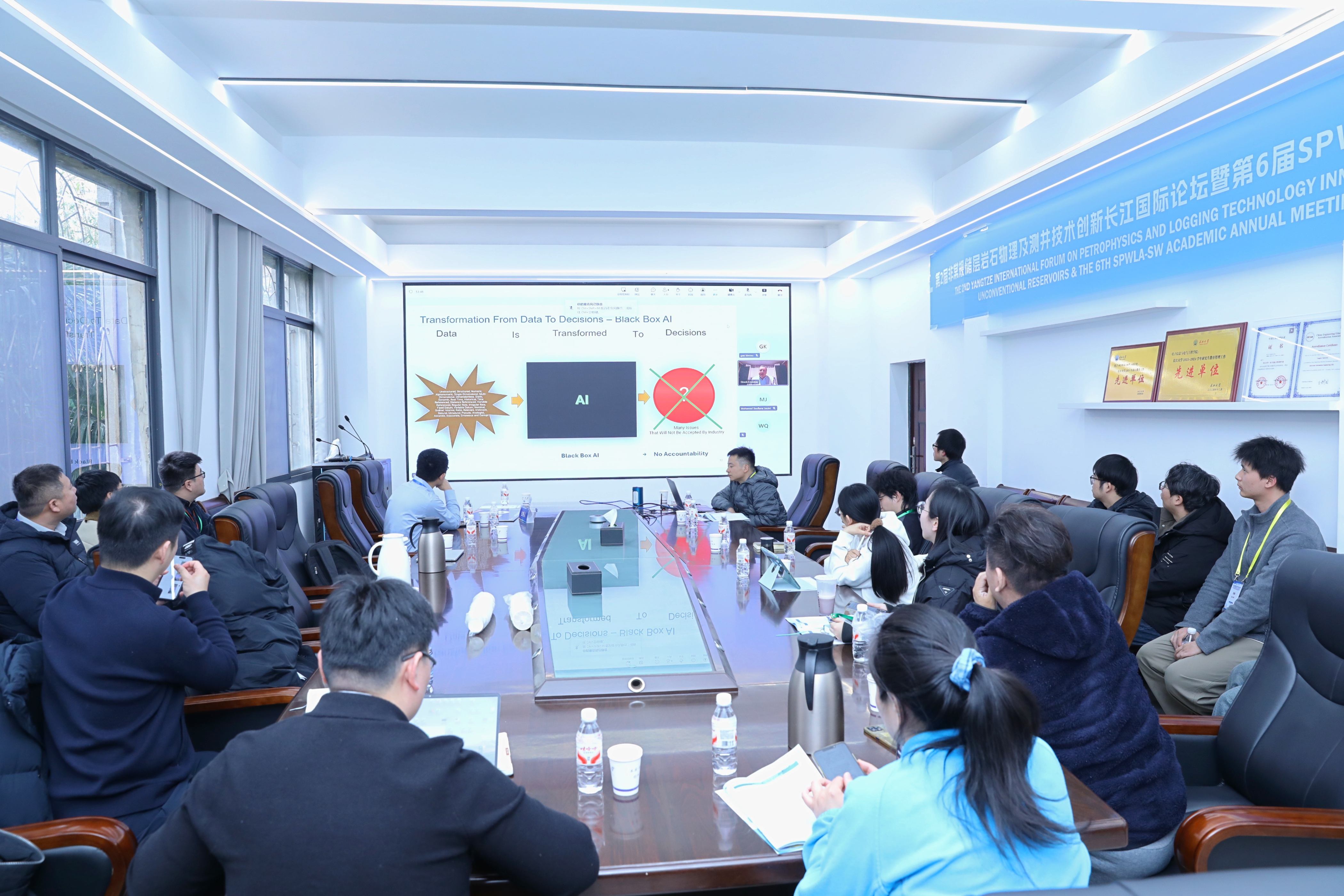
Experts presenting and engaging in technical discussions during parallel sessions
Broad Participation from Academia and Industry
The symposium attracted strong participation from both academia and industry. Leading energy companies and service providers, including Schlumberger Limited, China National Petroleum Corporation (CNPC), China Petroleum & Chemical Corporation (Sinopec), and China Oilfield Services Limited (COSL), actively contributed to technical discussions and technical exchange. The conference served as an effective platform for sharing research outcomes, discussing practical challenges, and fostering collaboration among universities, research institutions, and industry partners.
Student Paper Competition and Talent Development
In parallel with the main conference, the SPWLA Paper Competition Finals were successfully conducted. The competitions were evaluated by a panel of internationally recognized experts, including Harry Xie, Hua Wang, and Christian Rambousek. The student competitions provided an important platform for young researchers to present innovative ideas, enhance academic communication skills, and engage early with real-world challenges in reservoir evaluation and logging technology. They also demonstrated SPWLA’s long-standing commitment to nurturing the next generation of geoscience and petrophysics professionals.

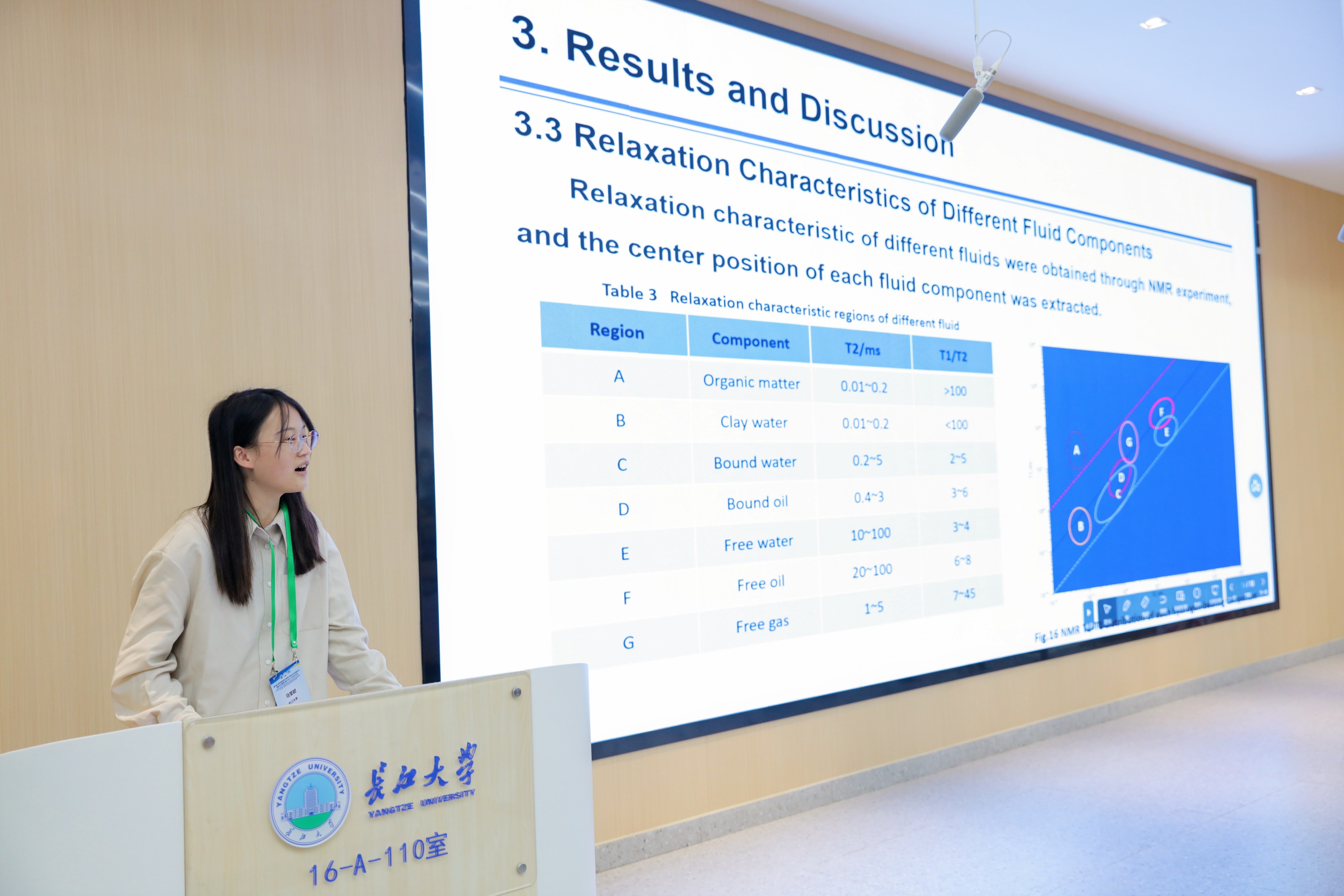
Students presenting their research during the SPWLA Student Paper Competition
Executive Committee Meeting and Chapter Development
During the symposium, the Executive Committee of the SPWLA SW Chapter convened to discuss organizational matters and future plans. It was agreed that the next annual symposium will be held in Sanya, hosted by Northeast Petroleum University. In addition, the committee formally approved the admission of Chang’an University into the SPWLA SW Chapter, further strengthening the chapter’s academic diversity and regional representation.

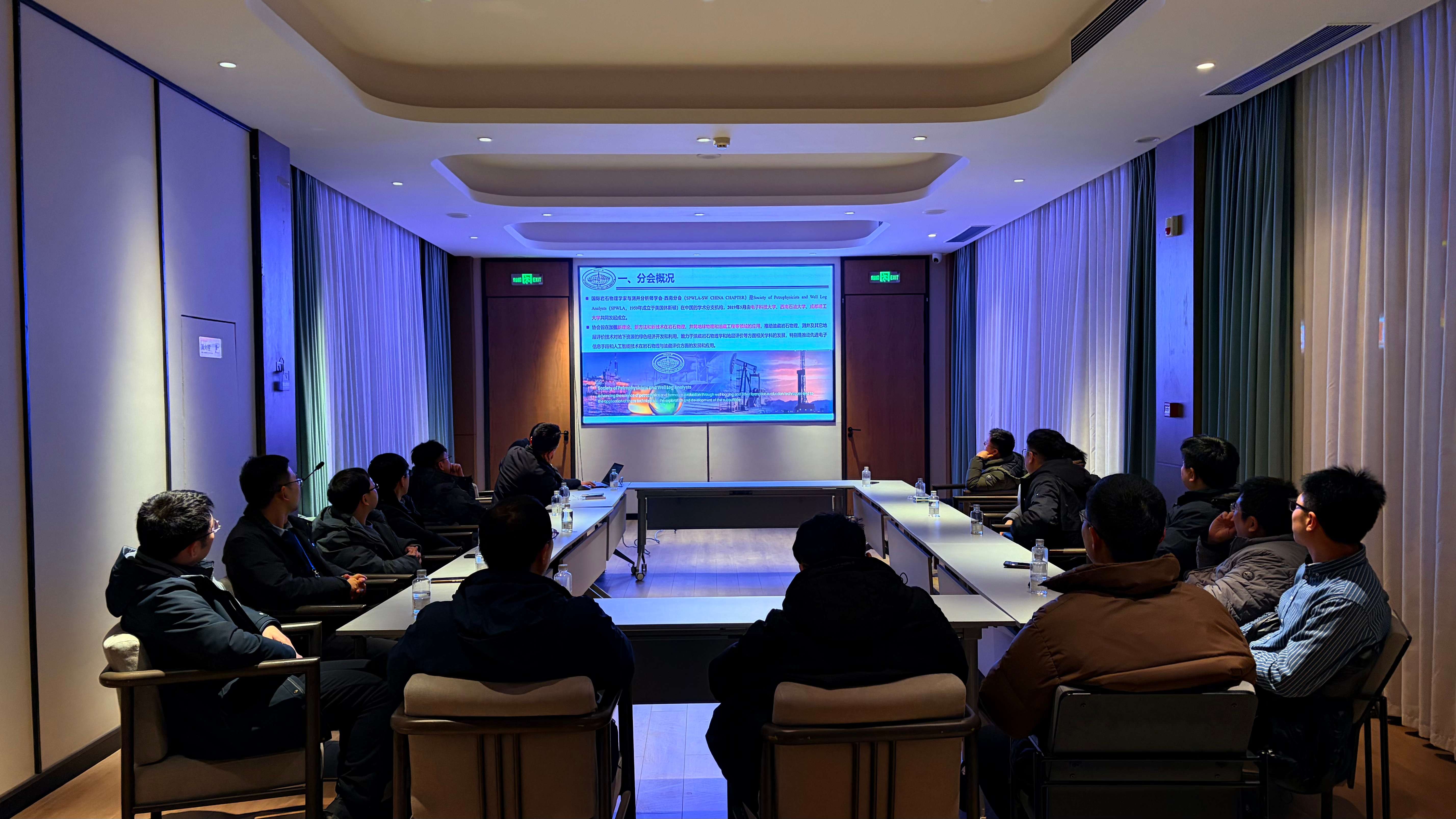
Executive Committee meeting of the SPWLA SW Chapter
Cultural Exchange and Local Academic Heritage
Beyond the technical sessions, participants also took part in cultural and academic site visits in Jingzhou. With its long and rich history, Jingzhou is not only an important cultural center, but also a city deeply connected to the development of China’s petroleum and geoscience disciplines. These activities provided participants with valuable opportunities to appreciate the historical roots of petroleum exploration and to gain a deeper understanding of the scientific spirit underlying the evolution of logging and geophysical technologies.
Special attention was given to commemorating Academician Wenbo Weng, a pioneer of geophysics and well logging in China. His foundational contributions to geophysical exploration and logging theory have had a lasting influence on the development of modern logging technologies and the training of generations of geoscientists. The visit served as both a tribute to his scientific legacy and a reminder of the discipline’s historical continuity.
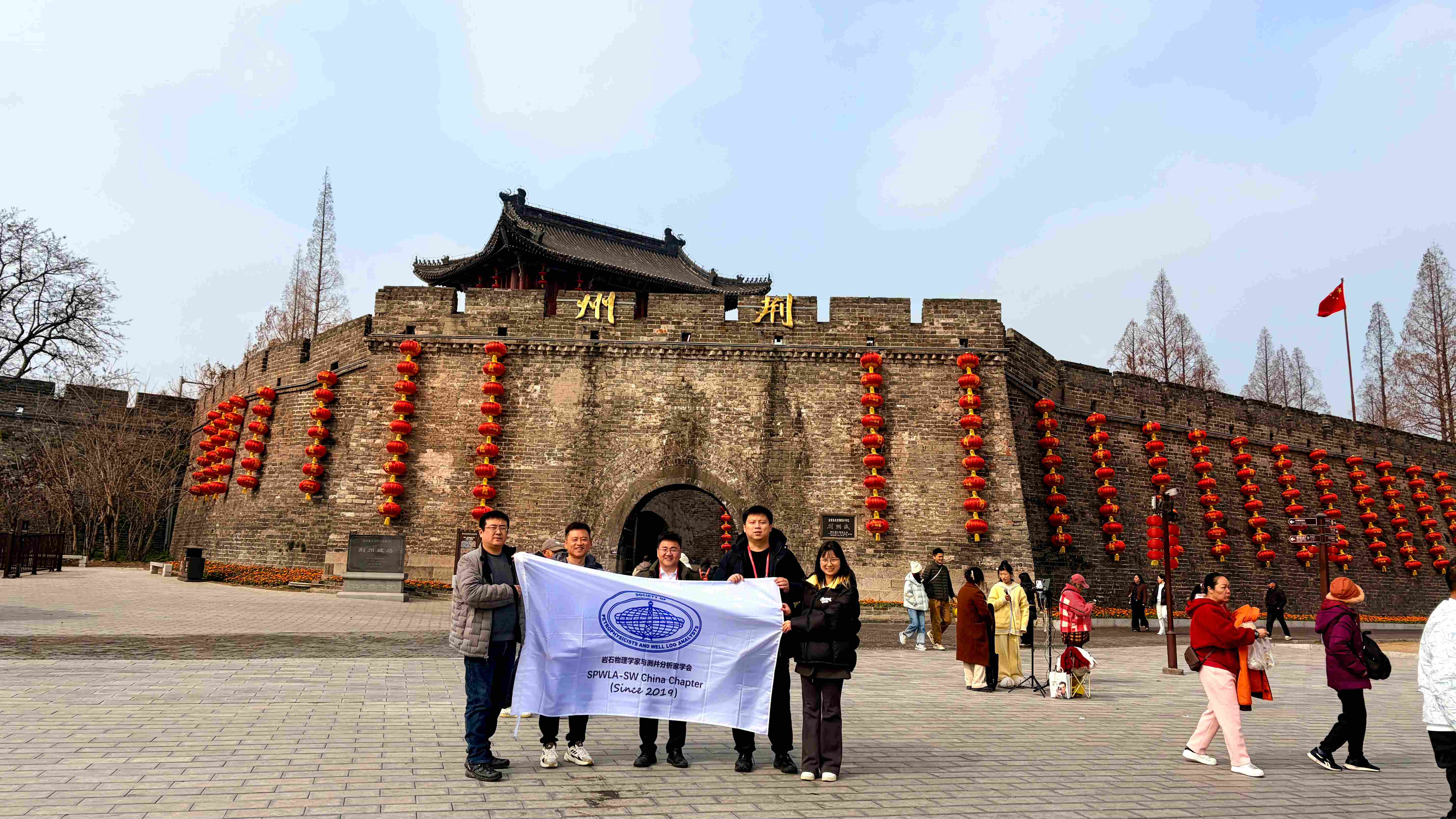

Group photo of SPWLA SW Chapter members at the Jingzhou Ancient City Wall

Group photo of SPWLA SW Chapter members in front of the statue of Wenbo Weng
Conclusion
As a well-established academic platform in the field of unconventional reservoir rock physics and well logging, the symposium and forum continue to strengthen international exchange, promote industry–academia collaboration, and support the development of young professionals. The successful organization of this year’s event further enhanced the visibility and impact of the SPWLA SW Chapter within the global SPWLA community.